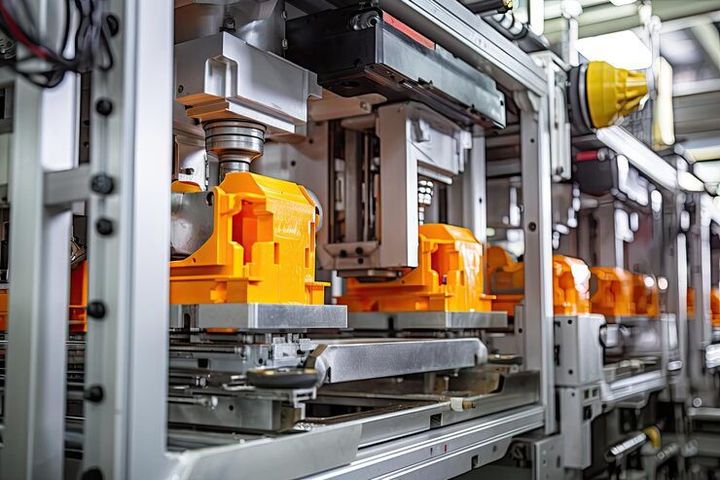
Industrial Plastic Molding Guide: Processes, Costs, and Selection
Industrial plastic molding converts raw polymer resins into durable, high-precision components for sectors ranging from automotive and medical devices to consumer electronics and packaging. Selecting the right molding technique and manufacturing partner directly impacts unit production costs, structural integrity, and supply chain reliability.
Modern manufacturing relies on several distinct molding methods, each engineered to meet specific geometric requirements, production volumes, and budget constraints. Evaluating these core technologies ensures optimal part performance and cost efficiency before committing to expensive tooling.
Custom Plastic Injection Molding
Custom plastic injection molding dominates high-volume production due to its exceptional repeatability and tight dimensional tolerances. During this process, thermoplastic pellets are melted inside a heated barrel and injected under high pressure into a precision-machined steel or aluminum mold cavity. Once the molten polymer cools and solidifies, ejector pins release the finished component in cycle times often lasting only seconds. This method supports complex geometries, intricate internal threads, and multi-material overmolding, making it the preferred choice for mass-producing medical housings, automotive interior trim, and precision gears.
Blow Molding for Hollow Components
Blow molding specializes in manufacturing seamless, thin-walled hollow parts by inflating a heated plastic tube, known as a parison, inside a closed mold cavity. Compressed air forces the softened resin outward against the chilled mold walls until it takes the exact shape of the container or duct. Extrusion blow molding handles large industrial drums, chemical tanks, and automotive fluid reservoirs, while injection blow molding delivers superior neck finishes for pharmaceutical bottles and sterile packaging.
Rotational Molding and Thermoforming
Rotational molding produces large, stress-free hollow items such as agricultural storage tanks, marine buoys, and heavy-duty material handling bins. Powered resin is placed inside a hollow mold that rotates biaxially inside a heated oven, coating the interior surfaces evenly without high internal pressure. Conversely, industrial thermoforming heats flat thermoplastic sheets until pliable and stretches them over a single-sided mold using vacuum pressure. Thermoforming offers significantly lower tooling costs than injection molding, providing an economical path for large equipment enclosures, protective transit trays, and commercial appliance liners.
Key Materials in High Volume Plastic Manufacturing
Choosing an appropriate polymer resin requires balancing mechanical strength, chemical resistance, thermal stability, and raw material pricing. Engineering-grade thermoplastics provide superior durability for demanding environments, whereas commodity resins keep per-part expenses low for high-turnover goods.
Commodity vs. Engineering Thermoplastics
Commodity resins such as polypropylene, high-density polyethylene, and polystyrene account for the majority of everyday packaging, caps, and lightweight consumer goods due to their low cost and rapid processing speeds. When applications demand higher heat deflection temperatures, impact resistance, or load-bearing capacity, manufacturers specify engineering thermoplastics like acrylonitrile butadiene styrene, polycarbonate, nylon, and polyoxymethylene. For extreme aerospace, electrical, or chemical environments, high-performance polymers including polyether ether ketone and polyphenylene sulfide replace machined metal components while reducing overall assembly weight.
Evaluating Plastic Injection Molding Cost and Tooling
Upfront capital expenditure and ongoing unit pricing depend heavily on mold complexity, cavity count, and resin selection. Understanding the financial structure of custom mold making services helps procurement teams forecast total project budgets accurately.
Tooling Design and Mold Lifespan
The primary upfront investment in industrial molding is the fabrication of the mold itself, which typically accounts for the largest portion of initial project expenses. Prototype or low-volume runs often utilize CNC-machined aluminum tooling, which cuts lead times and initial capital outlay while supporting up to ten thousand cycles. High volume plastic manufacturing requires hardened tool steel molds capable of withstanding over one million production cycles without dimensional wear. Incorporating multi-cavity molds increases initial tooling costs but dramatically reduces per-unit labor and machine runtime expenses across large production orders.
Secondary Operations and Quality Assurance
Beyond basic molding, turnkey contract plastic manufacturing frequently integrates value-added secondary operations to deliver assembly-ready components. Automated robotic part removal, ultrasonic welding, pad printing, heat staking, and cleanroom assembly streamline supply chains by consolidating vendor management. Reputable production facilities maintain strict quality control protocols using coordinate measuring machines, optical inspection systems, and statistical process control to verify that every batch adheres to international manufacturing standards.
Selecting Industrial Plastic Molding Manufacturers
Partnering with an experienced molding supplier mitigates supply chain disruptions, prevents costly tooling revisions, and accelerates time to market. Procurement managers and product engineers should evaluate prospective vendors across technical capability, engineering support, and financial stability.
Design for Manufacturability Support
Top-tier thermoplastic molding services provide comprehensive Design for Manufacturability reviews prior to cutting steel. Experienced mold engineers analyze wall thickness uniformity, draft angles, gate locations, and parting lines to eliminate common defects such as sink marks, warping, short shots, and flash. Utilizing mold flow simulation software allows engineers to predict how molten resin fills the cavity, optimizing cooling channels and reducing cycle times before production begins.
Certifications and Production Capacity
Industry-specific compliance certifications verify a manufacturer's commitment to consistent quality and regulatory adherence. Medical device OEMs require partners certified under ISO 13485 with validated cleanroom molding capabilities, while automotive suppliers must hold IATF 16949 accreditation. Additionally, assessing a facility's press tonnage range, automated material handling systems, and resin sourcing networks ensures the supplier can scale output seamlessly as market demand grows.
Disclaimer
The information provided in this article is for general educational and informational purposes only and does not constitute professional engineering, financial, or manufacturing procurement advice. Tooling costs, material specifications, and production tolerances vary based on specific part geometry, market resin pricing, and supplier capabilities. Readers should consult qualified industrial engineers and certified manufacturing specialists before finalizing product designs or entering into commercial production agreements.